
Preservation
The Foundation grows Huachuma in the Sacred Valley, where the plant does not grow wild and where the ceremonies are.
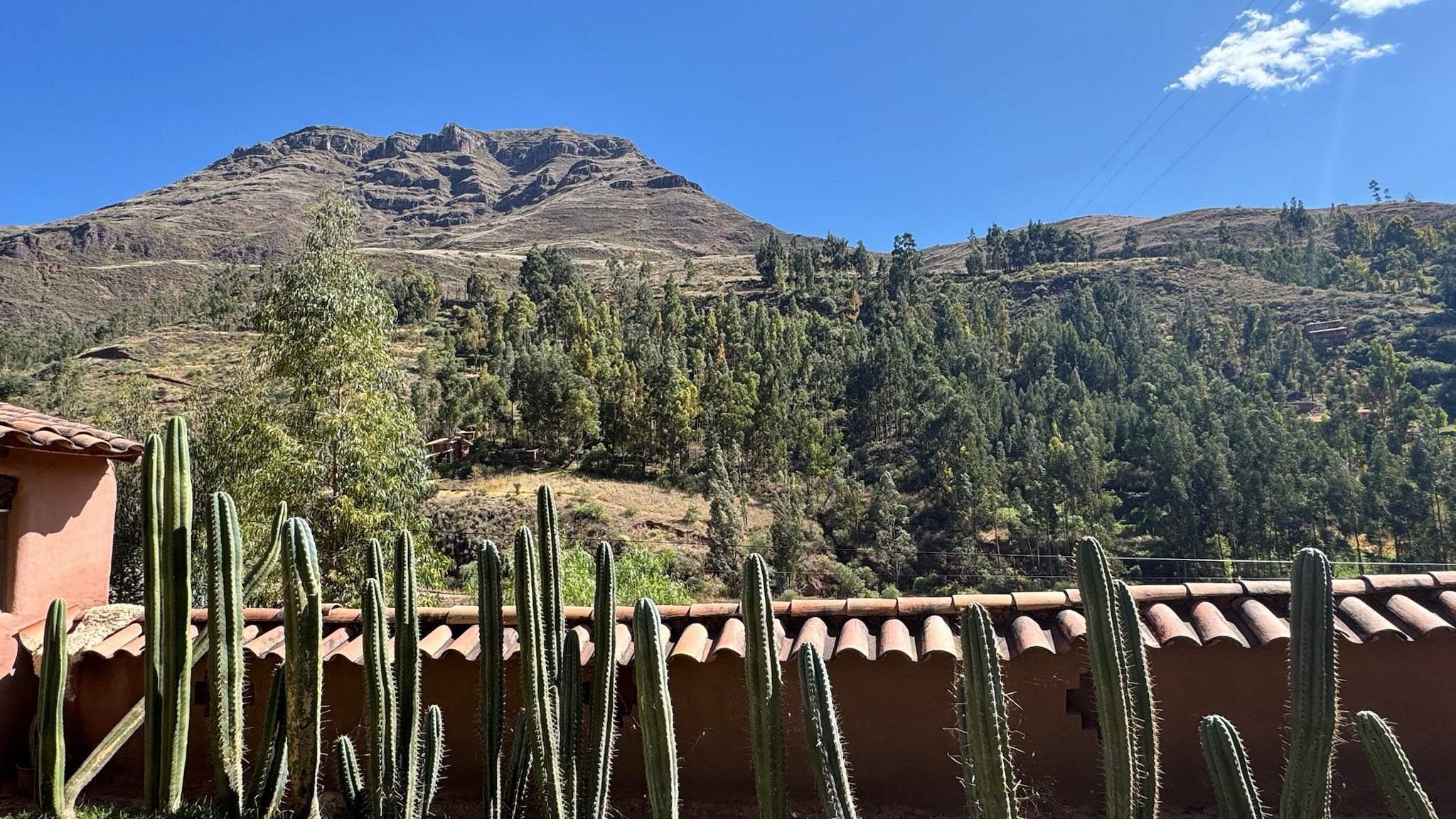
The Sacred Valley
Huachuma is an Andean plant and the Sacred Valley is in the Andes, which is why almost everybody assumes the two go together. The plant’s range is narrower than the mountains it belongs to, and it does not grow wild in the valley around Pisac and Taray.
There is a great deal of cactus on those hillsides and visitors reasonably take it for what they are drinking.
So the tall columns a visitor photographs on the walk up to a ceremony are not the plant the ceremony uses.
The cactus on those hillsides is largely Trichocereus cuzcoensis, named after Cusco and a close relative in the same family. It carries some mescaline, far below the medicine cacti and nothing like enough for a ceremony.
Ogunbodede et al., Journal of Ethnopharmacology, 2010.
Where it comes from
The medicine served in the Sacred Valley arrives by road. It comes from the regions of northern Peru where these cacti do grow wild, hundreds of kilometers away, and it is largely cut from wild plants.
The demand it meets is not Peru’s alone. Dried cactus and powder are ordered from the United States, Europe, Australia and Asia, and it comes out of Peru. Where any particular order was cut is not something a buyer can find out.
Huachuma does grow readily, and that is where the reassurance comes from: it is not peyote, it puts out arms, a cutting will root. All of that is true of a plant in a garden. Almost none of the cactus grown that way in the United States or Europe is what anybody drinks.
“There’s always the complicated truth, and then the simple lie. It’s much easier to believe the simple lie than to actually dive into the complexity.”
Hamid Jabbar
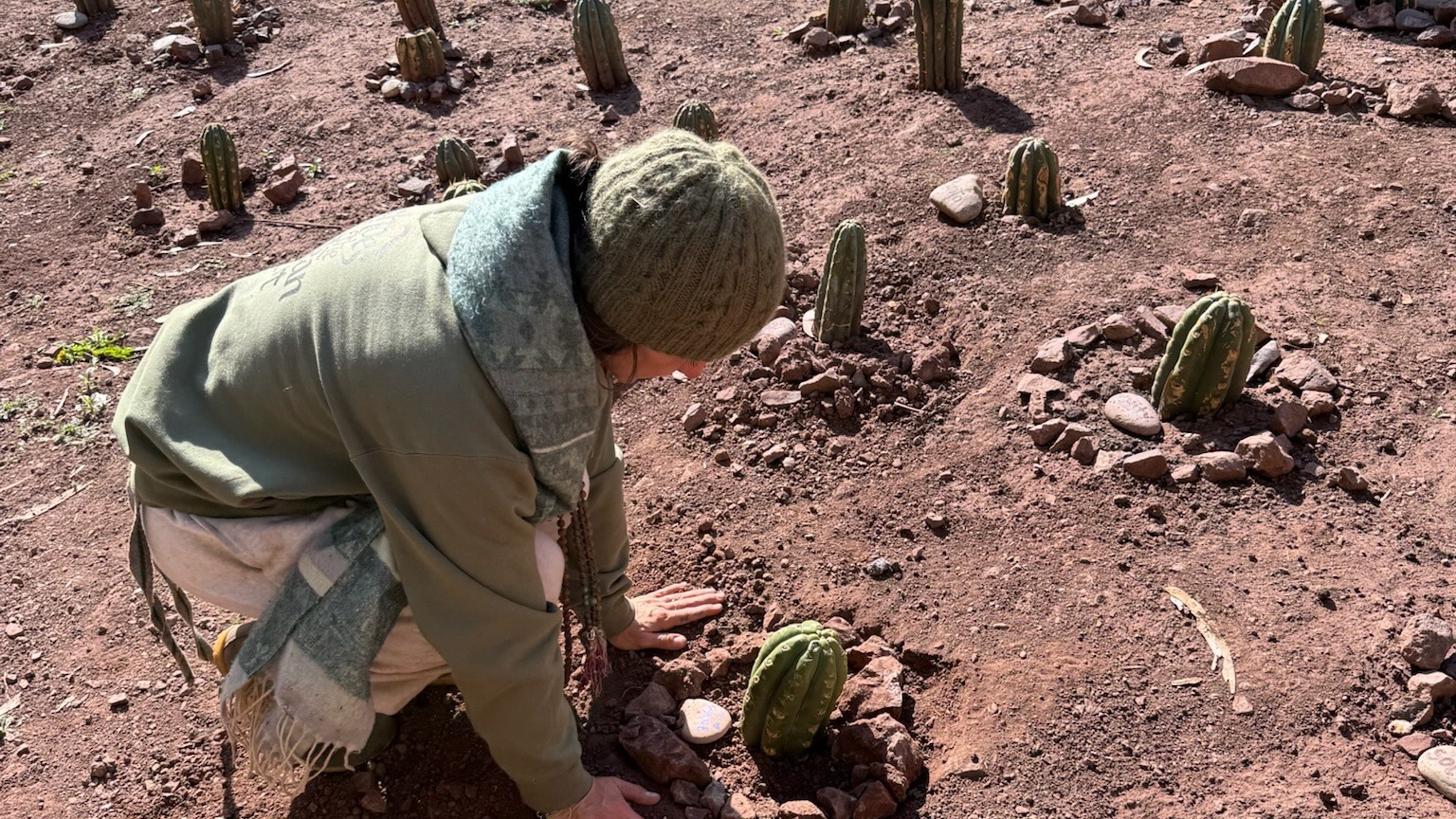
Taray
The Taray Preservation Garden sits in the Sacred Valley on a hillside cut into terraces, a short way from the villages where the ceremonies happen.
It was established with Miguel Mendiburu, a Huachumero who has worked with these plants in this valley for decades. He has planted for years, and the ceremonies he offers ask for more cactus than his own plants can give.
A garden in the valley shortens that road to nothing. Cactus grown here is cactus that never has to be brought down from the north, and it is the entire reason this garden is where it is.
In the ground
Several hundred
What the terraces hold
Five thousand
Every cactus grown here is one that does not have to be brought down from the north.
The Foundation plants a garden and pays for it, on its own initiative, and less pressure falls on the wild stands that other people rely on. That is a narrower aim than saving a species, and it is one the Foundation can actually carry out.
It is also why the garden is in the Sacred Valley rather than somewhere easier to reach. This is where the demand is.
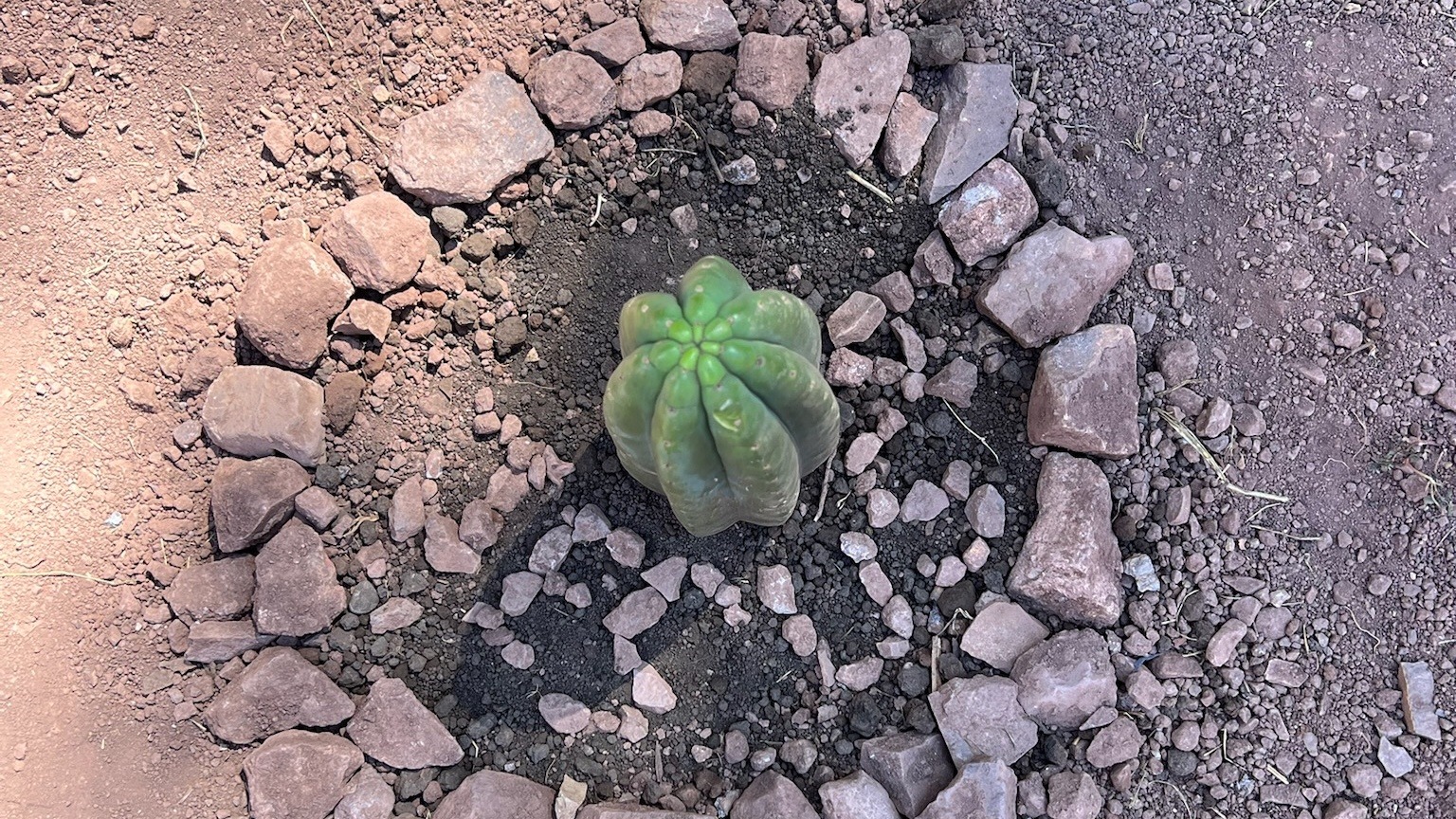
Planting forward
A cactus planted this season will not be medicine for a long time. That is the honest answer to what a gift does today, and it is also the point. The garden is planted for people who will drink from it long after the people who planted it have stopped.
There is a second thing, and it costs nothing. The first question people ask about this plant is usually where to buy it. A better one is where to get a cutting and grow one.
And if the trip is already booked, or being thought about, the person matters more than the place. What to look for is on choosing a facilitator.
“Once you know about this, you do start to worry. Worrying isn’t really a great way to pray. Worrying about something is praying for the thing that you don’t want. The antidote is to do something about it.”
Hamid Jabbar