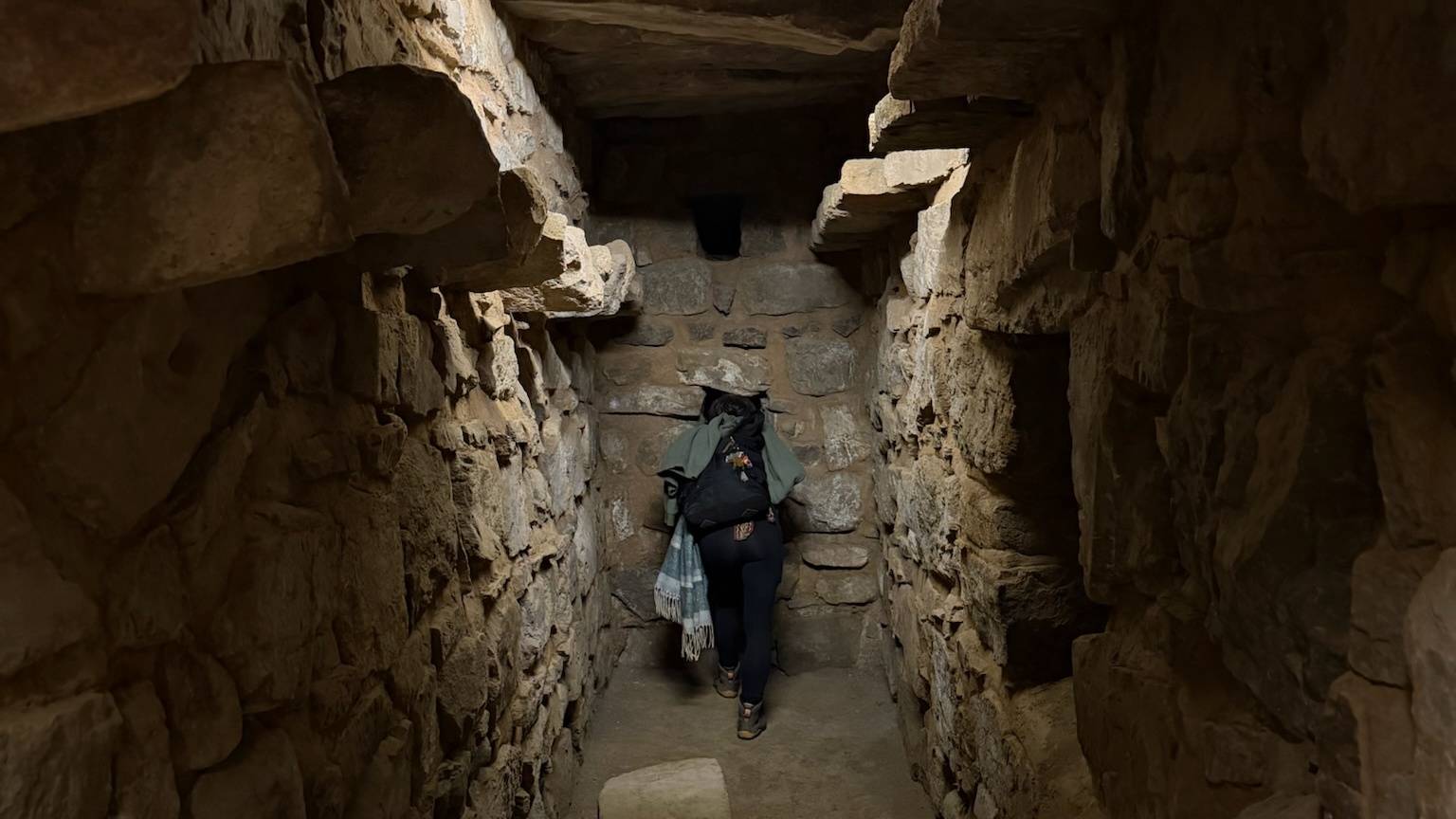
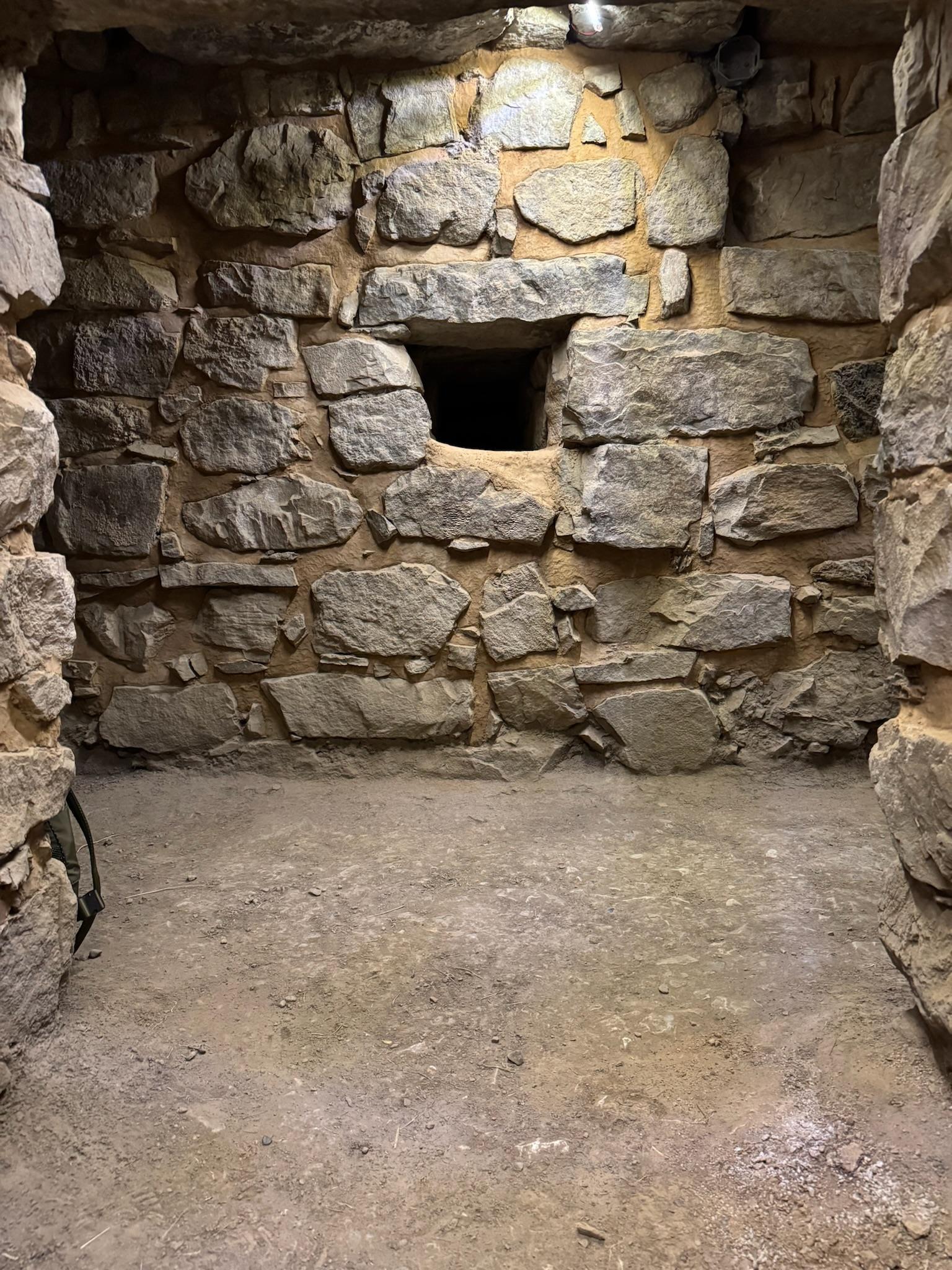
Chavín de Huántar stands in the mountains of Ancash in northern Peru, near the headwaters of the Amazon where the river is still a creek. Part of the complex is underground, and narrow stone galleries run beneath it.
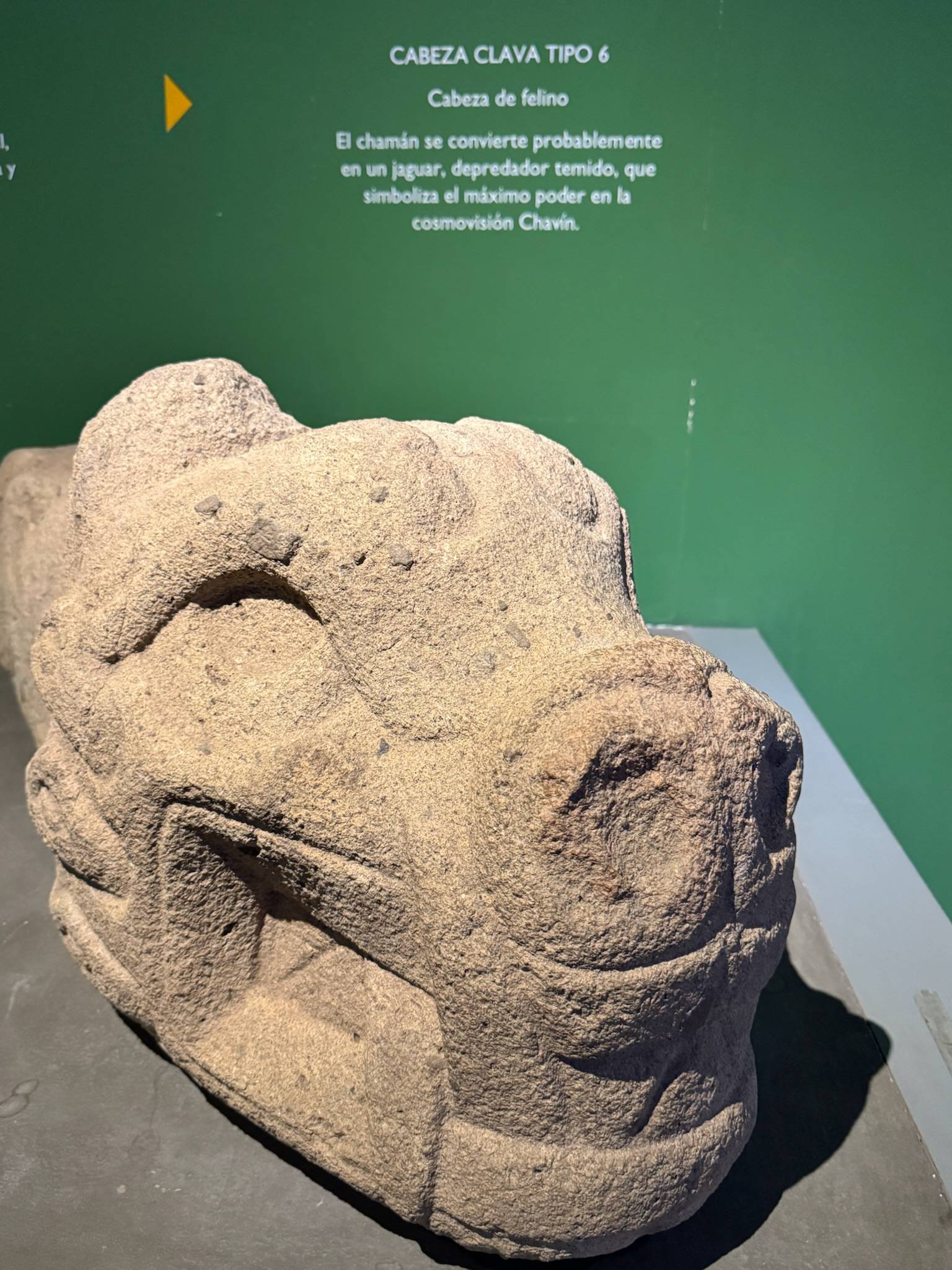
At the heart of those galleries stands the Lanzón, a carved granite shaft four and a half meters tall showing a fanged figure, which was the temple’s principal cult image. Tenoned stone heads were set into the outer walls.
The plant is in the carving. A figure in the Circular Plaza holds a Huachuma the way somebody would hold a staff, and it is the oldest clear evidence that people worked with this cactus in something like the way they do now.
The style is flattened and doubled, with faces resolving into other faces the longer they are looked at, and people who spend time with it often compare it with cubism.
Dating ranges differ across the literature. The current careful figure for the temple complex is 900 to 200 BC, and Chavín is described as a center of pilgrimage across a wider span than that.
Underground
The Galleries
The galleries are narrow passages cut under the temple. Outside there is the river, the wind and the birds. Inside there is none of that, and no daylight either.
Hamid Jabbar and Dani Reardon went with Miguel Mendiburu in June 2026. Ten people sat together in an unlit chamber there, close enough to hear one another breathe.
The silence in those passages was built rather than found.
“When we all sat, ten of us, you could kind of hear your own breathing, probably feel your own heartbeat, and every sound was so loud, because there was no background sound.”
Hamid Jabbar
Taking away every outside signal is a technology, and it is an old one.
Getting there
The Journey
Chavín was a center of pilgrimage for centuries and it has never been quick to reach. The road from Lima runs overnight to Huaraz and then three hours up into the mountains.
The site now
A Working Site
Chavín de Huántar is a working archaeological site with a ticket office, guards and visitors. The galleries carry small lamps so that nobody walks into a wall, and during a festival there are fireworks overhead.
Across the river
An Older Garden
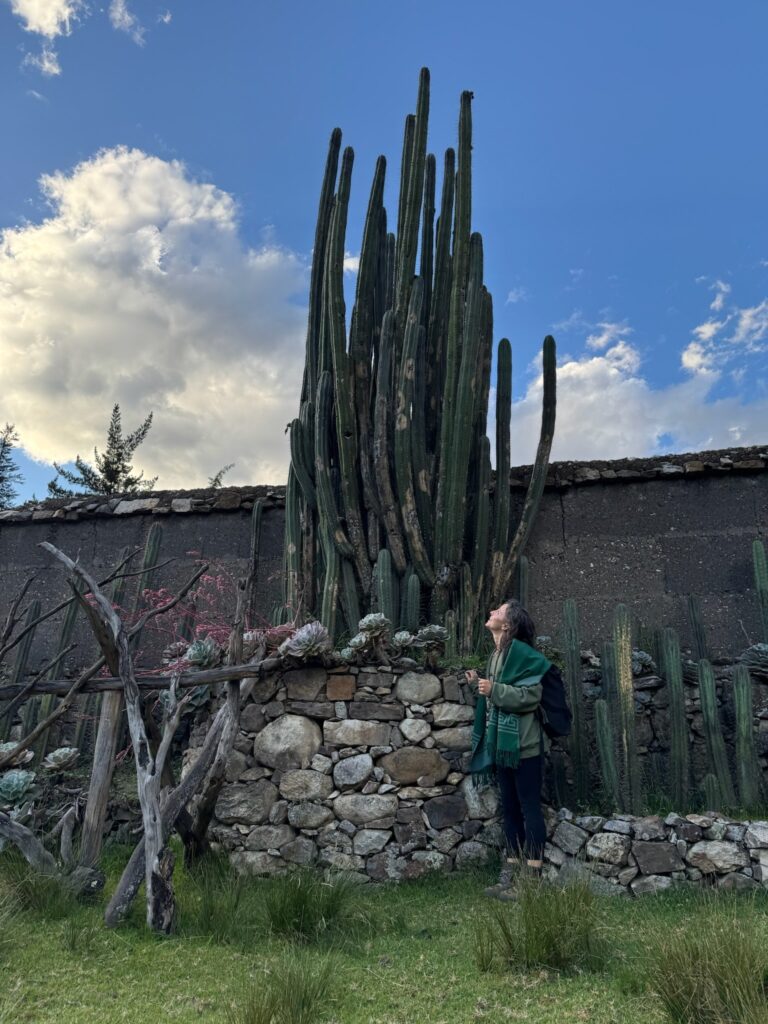
Across the river from the temple grounds there is a garden that one person has been planting for about twenty years. It holds thousands of mature Huachuma in precise rows, and it can be seen through the trees from inside the temple.
Miguel Mendiburu saw those cactus heads from the temple on an earlier visit and went over to look. The garden at Taray is what came of it.
Mature Huachuma at the private garden near the temple at Chavín, which the Foundation visited. One person has been planting it for about twenty years.
Taray, Sacred Valley
Growing It Here
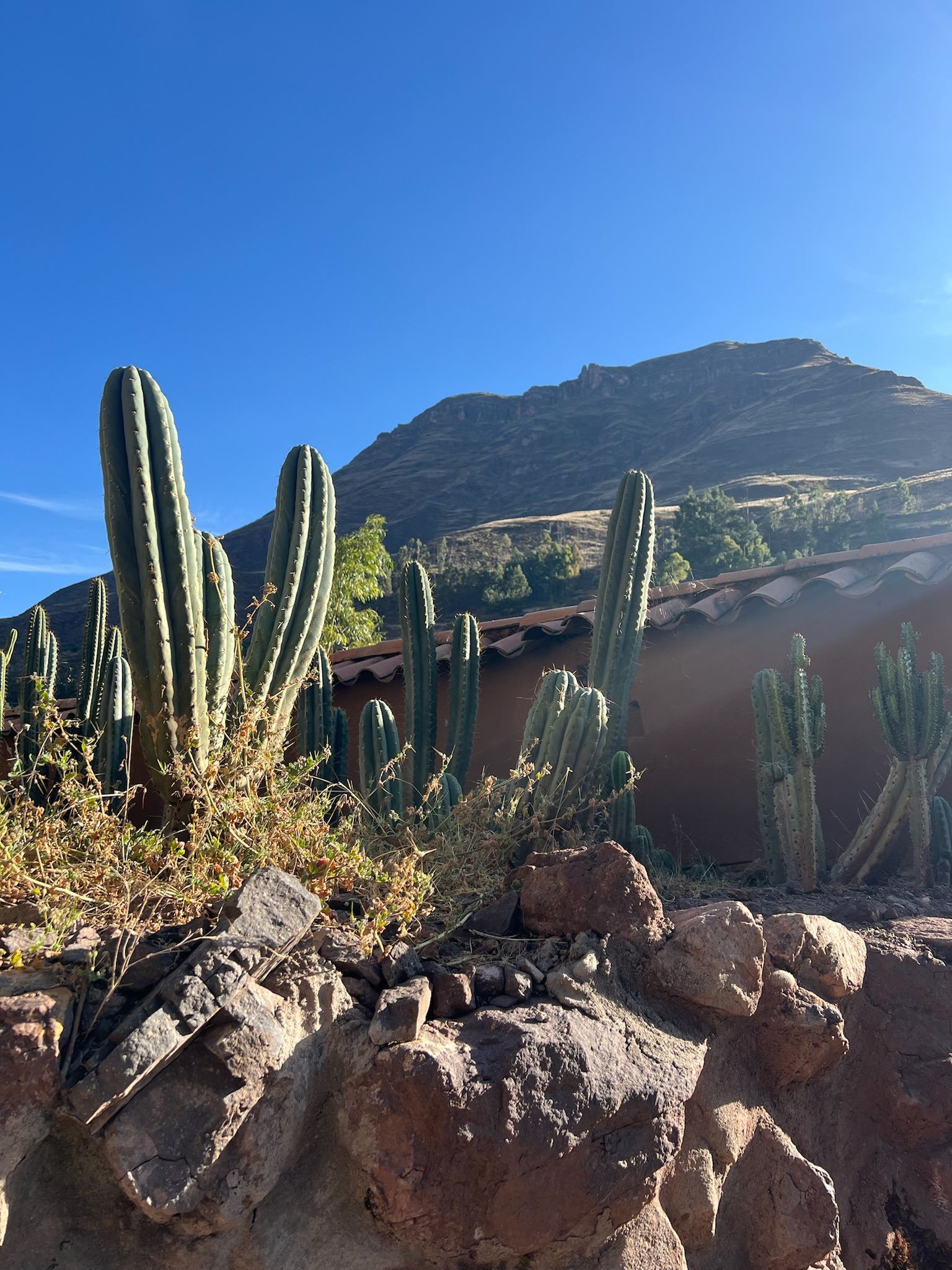
Huachuma grows wild in the country around Chavín. It does not grow in the Sacred Valley, where most people now come to drink it, so what is served there travels by road from the north.
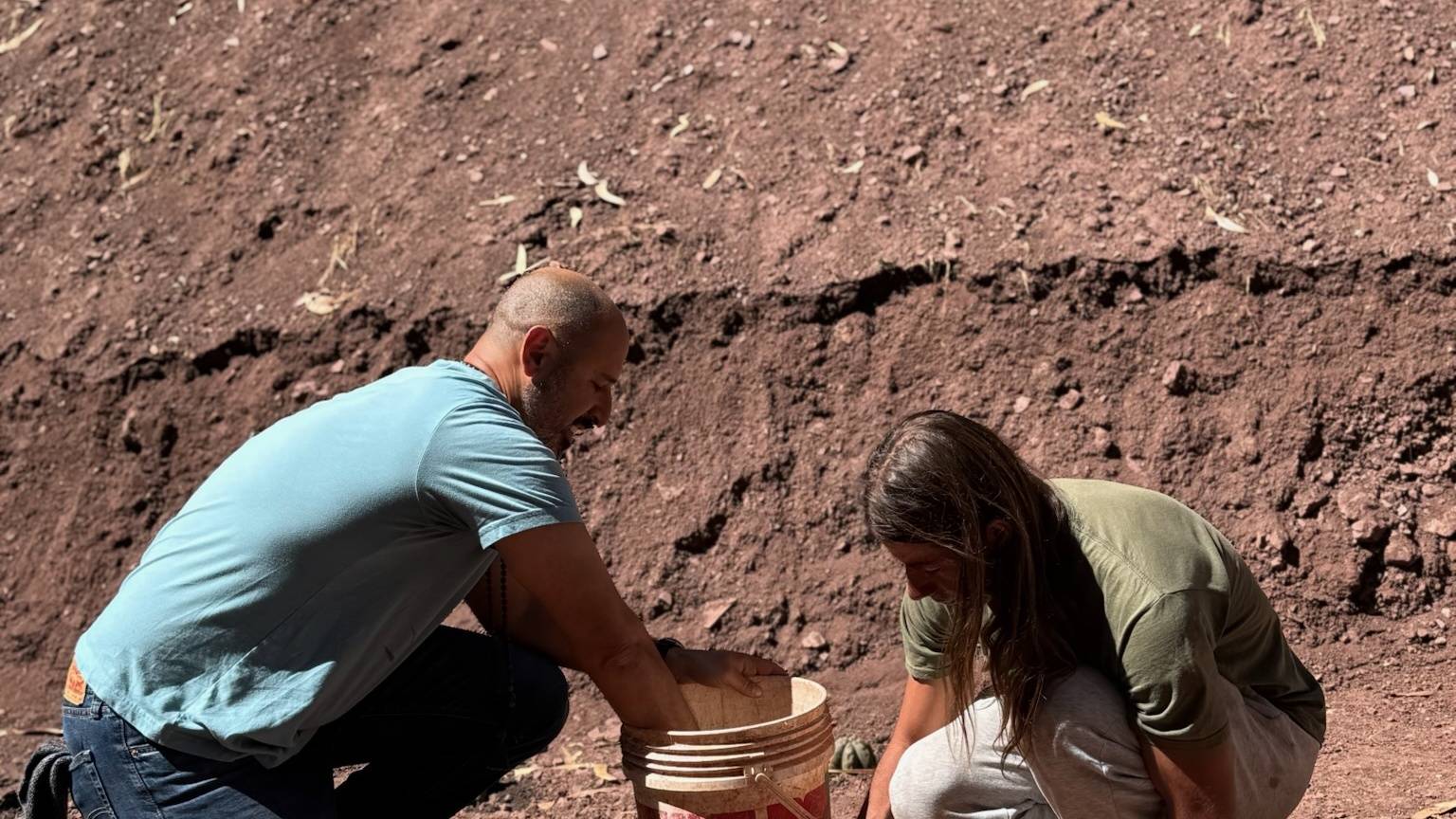
The Foundation plants at Taray, in the valley itself, on terraces built to hold five thousand. Every cactus that comes out of that ground is one that does not have to be brought down from the north.