
Education
Huachuma is a traditional name for a group of tall Andean cacti rather than a single species, and that is the first thing worth knowing about them.
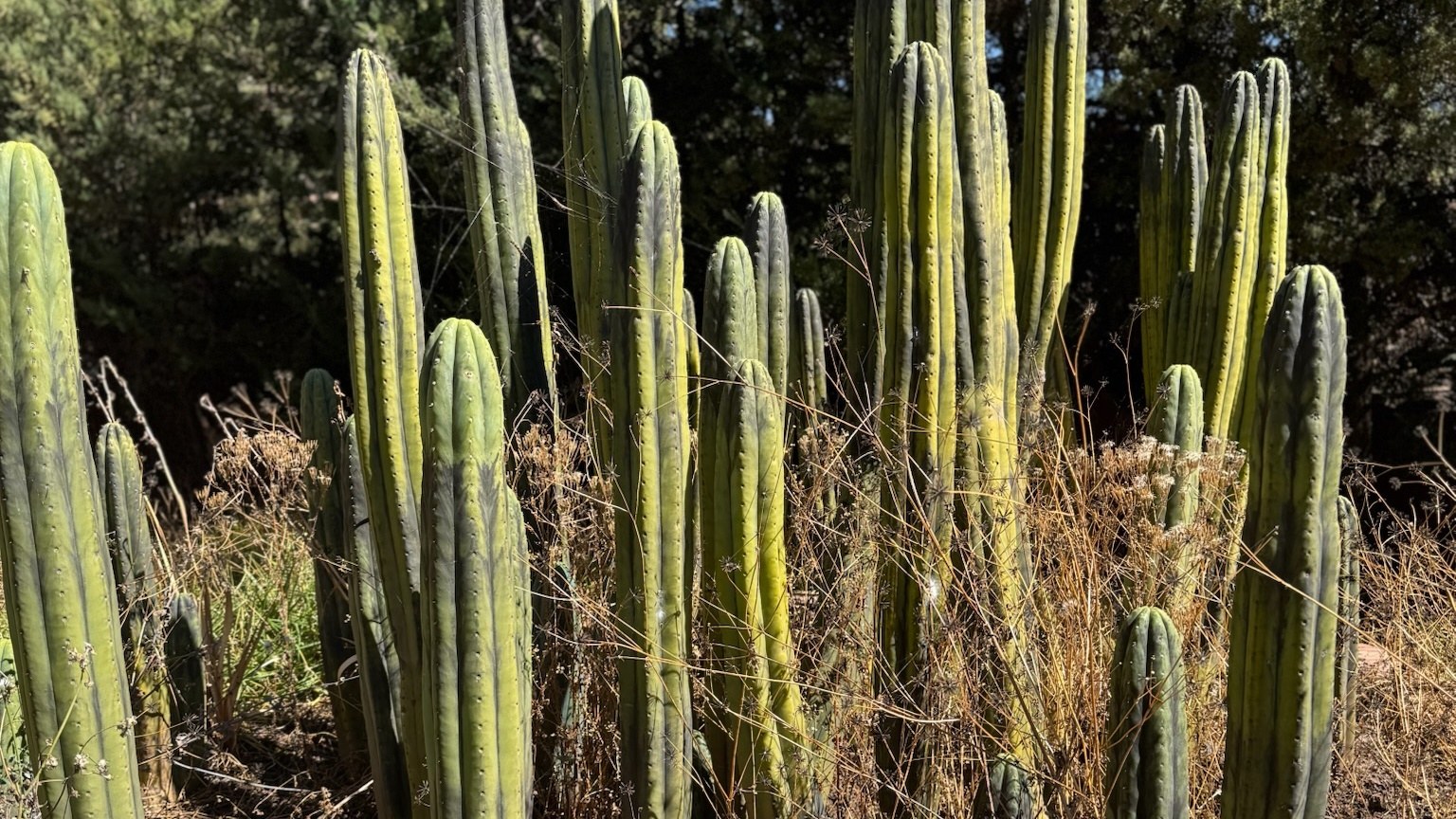
A pachanoi at Javier Regueiro’s old house, still going strong.
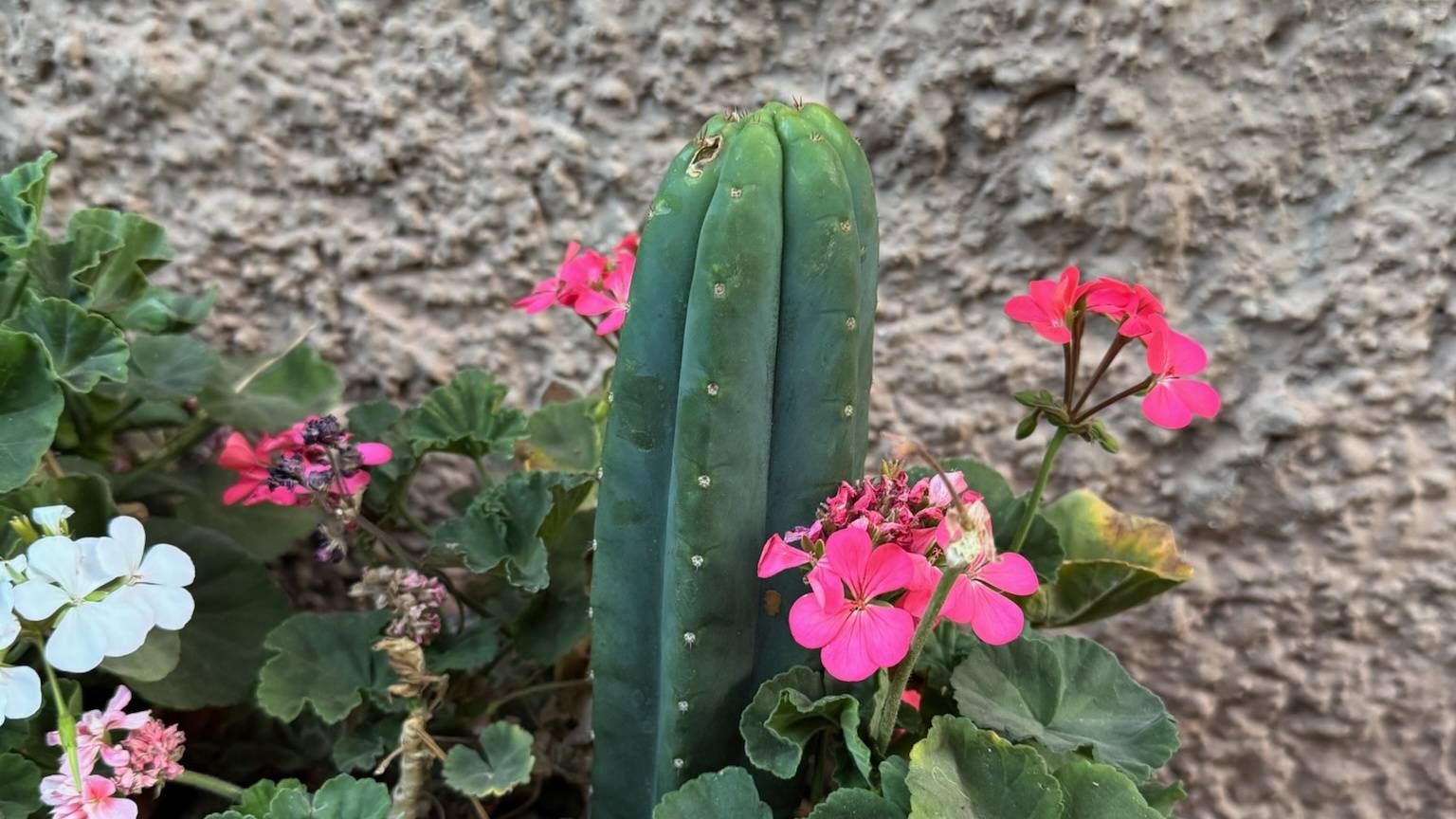
A pachanoi with bug damage.
Not one plant
Most books about San Pedro name a single species of cactus, Trichocereus pachanoi, sometimes written Echinopsis pachanoi. That is one of the Huachuma cacti. It is one of several.
Trichocereus pachanoiSmooth, with tiny areoles and small spines. What most people mean by Huachuma.
Trichocereus peruvianusNotchier, with larger areoles and more of them, and it tends to grow higher up.
Trichocereus bridgesiiThe Bolivian torch.
Trichocereus scopulicolaLow in mescaline, and beautiful to work with.
Within those there are probably hundreds of variations, because these species interbreed. A pachanoi growing near a peruvianus will be pollinated by it, and what grows from that is a hybrid nobody has a name for.
Some of these cacti are hybridised so far that what they are cannot be settled. That matters less than it sounds. They are their own thing.
The words for all this, variety, sub-variety and phenotype, are a grower’s rather than a botanist’s. What is certain is that there are many different types of these cacti and that each type has its own qualities.
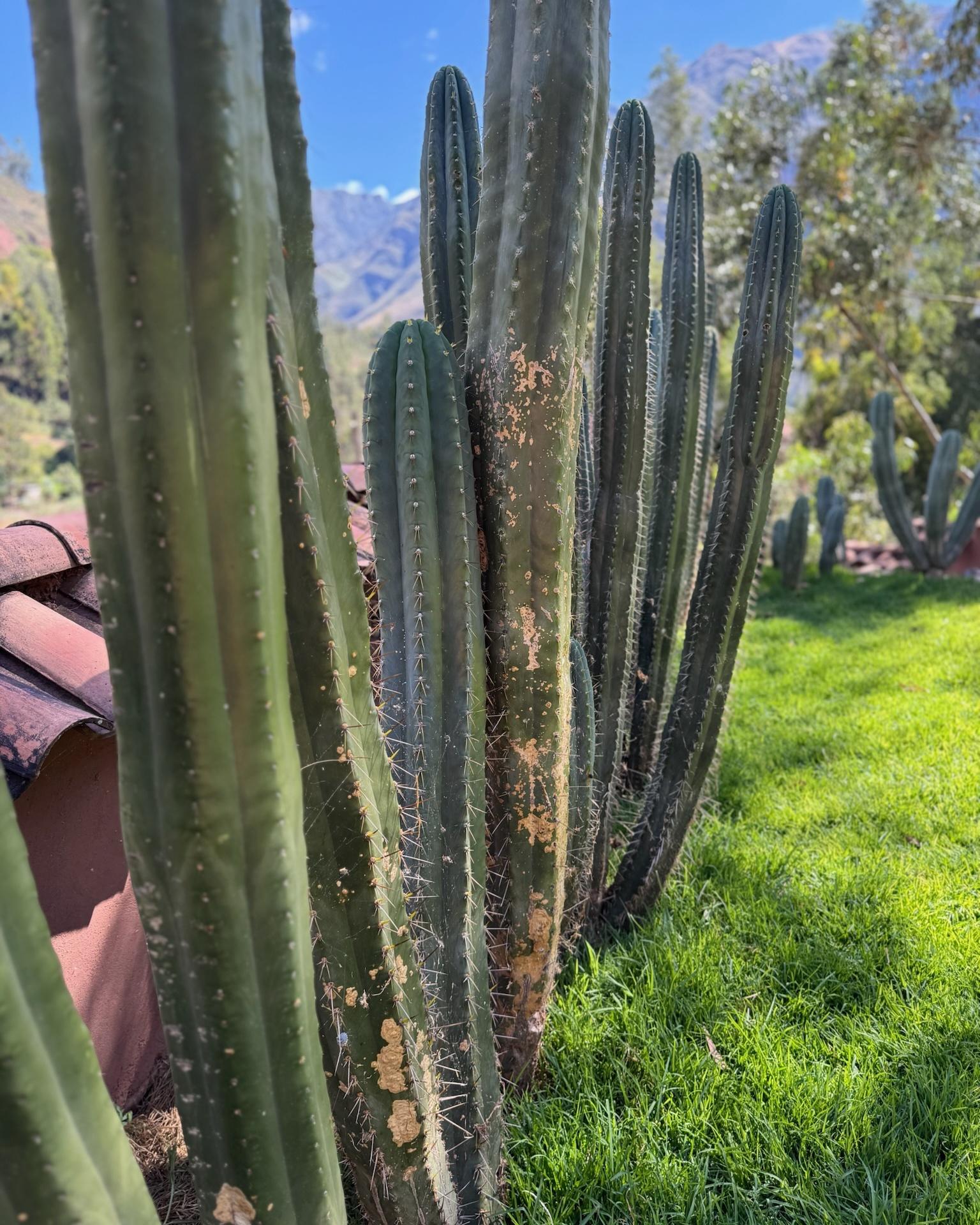
Short spined pachanois, with longer spined varieties among them that are likely crosses.
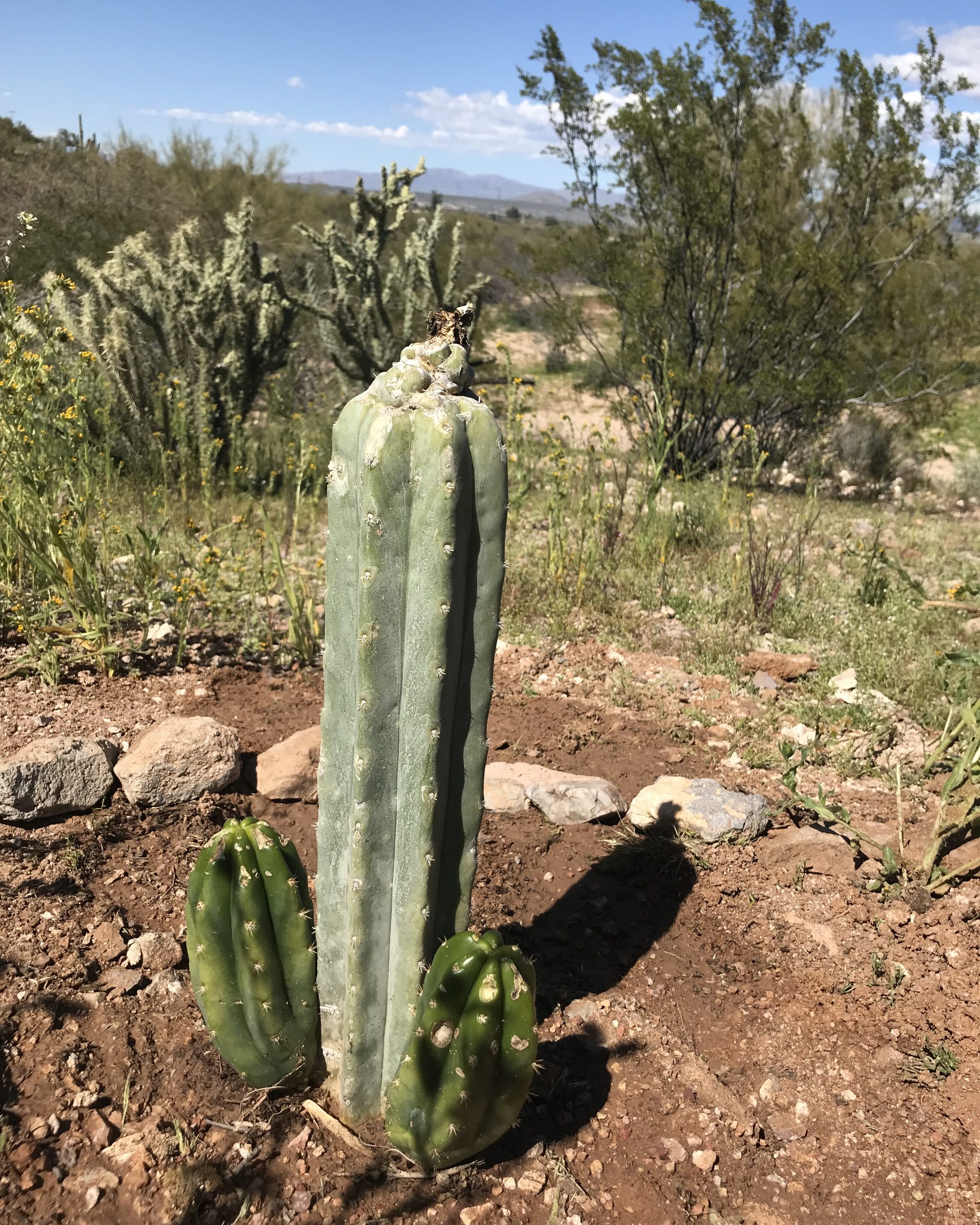
A PC, growing in Arizona.
A garden center in Arizona or California will sell a cactus labeled San Pedro. In the growing world that one has a second name, PC, for predominant cultivar, and it is not a type commonly seen in South America.
Keeper Trout calls it pachanot, a joke that is also a correction. There is nothing wrong with calling it a Huachuma or a San Pedro, and it is a beautiful plant. Treating it as the Huachuma is another matter: it is one type among many, and here it is far more ornamental than it is strong.
It is also infertile with itself. It sets no fruit with seed that can be planted, so it reproduces by cutting: an arm taken off and set down elsewhere roots and becomes a whole plant. Every one of those garden center cacti is a clone, a cutting taken from a cutting, ten thousand times over a hundred years.
The original was brought to the United States around the 1930s. They are all still that one cactus.
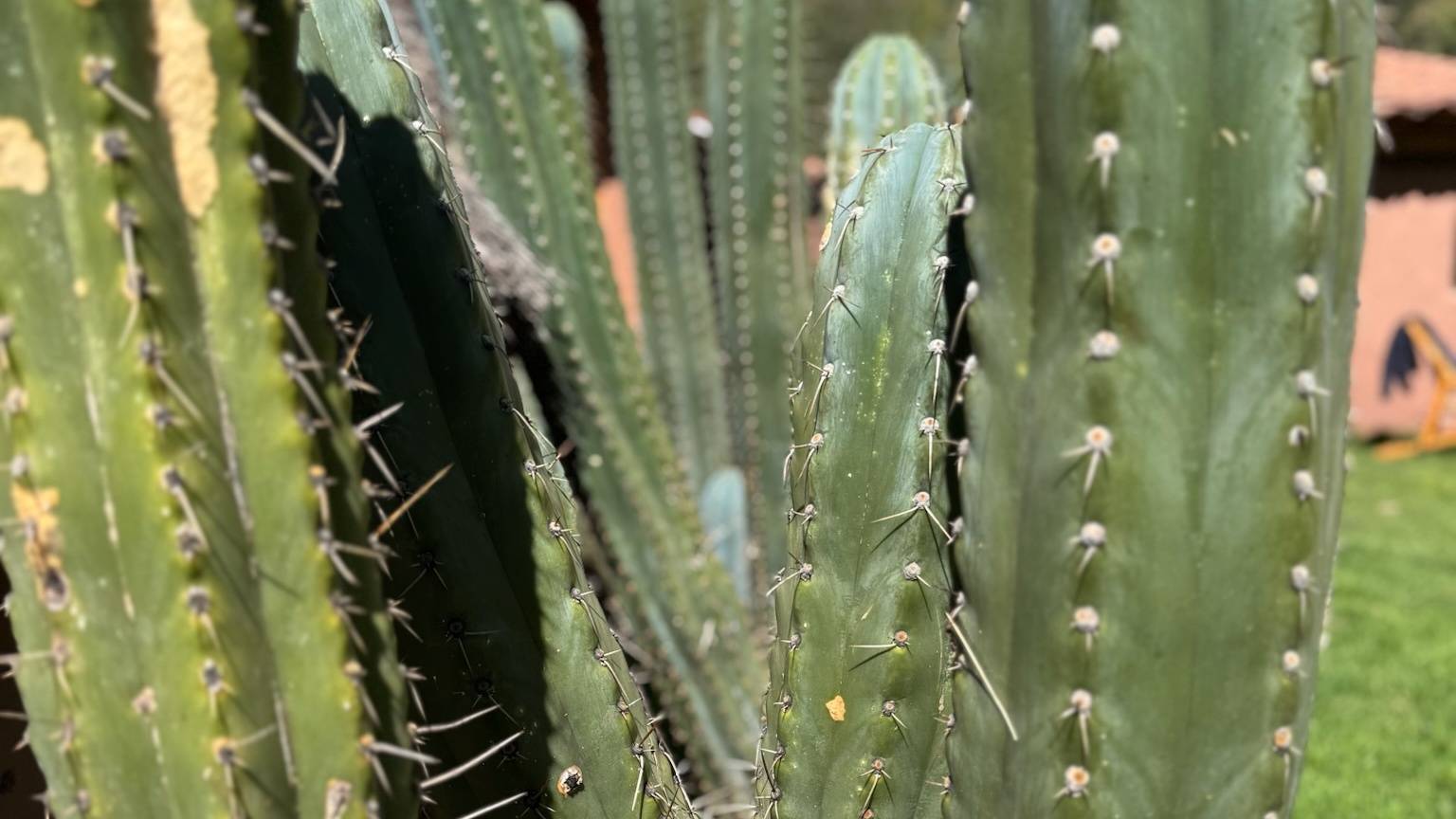
The larger areoles here are typical of peruvianus, though pachanoi and hybrids can be that way too.
Mescaline is the one people think of. It was among the first psychedelics isolated in the West and it was fairly easy to pull out chemically, which is most of why it dominates the conversation. It is one compound among many. There are tyramines in there too, and a long list of others, and fats and sugars and minerals.
The lists are shorter than the plants. When Keeper Trout records five alkaloids in a cactus, those are the five that could be identified. There may be hundreds. The means of analyzing them are limited.
In the United States these cacti tend to be prized by how much mescaline they are thought to hold. The Foundation does not rank them that way. A cactus is not of lesser value for carrying little mescaline, and some of the most profound medicinal cacti carry very little.
These are living beings. The Foundation works with them as teachers rather than as a source of a compound.
“Even the term extraction is really problematic because it again puts us in this place of valuing something based on what we can extract from it, what we can get from it, instead of just valuing and appreciating the cactus for what it is offering to us.”
Hamid Jabbar
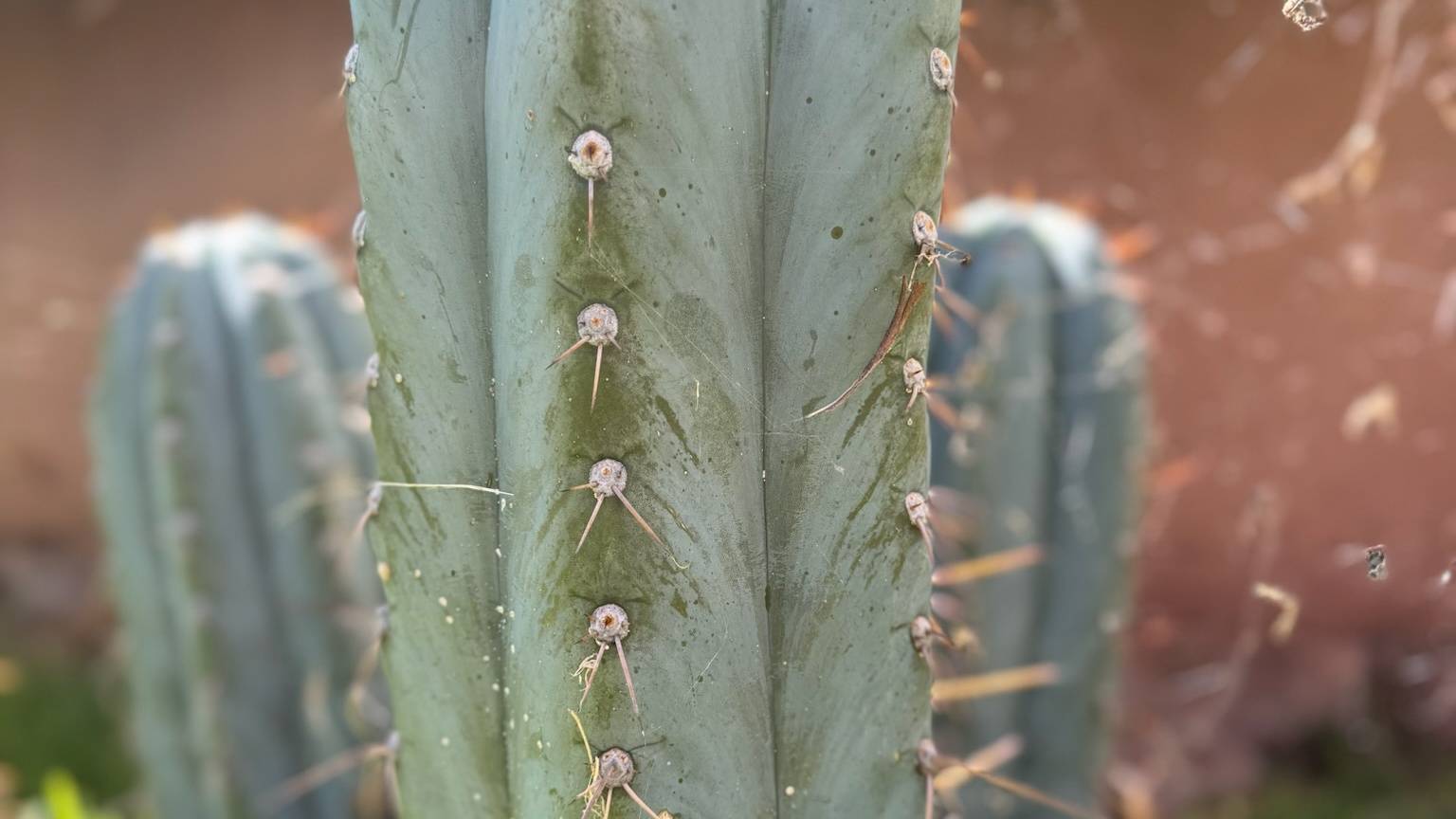
These look very peruvianus: peruvianus carries the larger areoles and often takes on that glaucous color.
Doctrine of signatures
There is an older way of understanding a plant that needs no chemistry. The doctrine of signatures holds that a plant shows its qualities in its form, so how it grows and how it looks say something about what it offers.
Set a Huachuma beside a peyote. Left to itself Huachuma forms huge columns reaching for the heavens. Peyote is a small button that hugs the earth and does not want to leave it. With nothing known about the alkaloids the two forms still read: peyote low and grounded and still, Huachuma an urge to stand up, to walk, to reach for the sun and the wind.
The same reading works inside the family. Pachanoi is smooth and mostly spineless, and it carries that open-hearted quality, less sharp and less prickly. Peruvianus is notchy and heavily spined, and its character is sharper.
The spines on a pachanoi are far too small to protect it from anything. It is possible they do another job, gathering the morning dew so the plant can drink where there is no rain.
One plant, many names
Huachuma is the Andean name and the one we use. San Pedro is the one most books use. They point at the same plant, and so does every name below.
Huachuma, Wachuma, Achuma, Chuma, Cuchuma, Andachuma, Huacuma. One word written down from several languages, which is where the spellings come from.
San Pedro, San Pedrillo, Gigantón, Cardo, Cardón, Cactus Real, El Remedio, Huando, Huando Hermoso. San Pedro is the name the books and most of the world use.
Aguacolla, Aguacoya, Agua Coya, Awacoya, Agua-collo. Northern Peru and Ecuador, where the plant and the water it grows near are spoken of together.
Buying a plant
What a nursery writes on a label, and what each part of it means.
Somebody’s name. It honors Abelardo Pachano, the Ecuadorian agronomist who took the American botanists Britton and Rose through the highlands in 1918 and showed them the plant. They named it after him in 1920.
The older genus, and the one a great many growers go on using.
The accepted genus. You will meet both, and the disagreement is worth knowing about.
The numbers attached to plants for sale, KK242 and the rest, come from Karel Kníže, a Czech collector who ran a nursery in Lima until he died in 2018.
Keeper Trout has done the most thorough work on these cacti that exists and much of it is free. Anybody learning to identify them should start at Trout’s Notes, with Pachanoi or Pachanot, which is the fastest way to see what PC actually is. The rest takes years.
Trout has noted that the categorization of these cacti has been muddled from the beginning. A plant taken for a pachanoi may be a peruvianus, and some of the lines being drawn may have nothing to divide.
Photographs of real plants are better. Trout’s work is better still. Time spent standing in front of a living cactus is best of all.
One warning about the internet. An image generator asked for a picture of Huachuma returns something else, usually a saguaro or an invention, and anybody relying on that for information is being misled.
Written by
Founder and Chairman of the Huachuma Foundation. He grows several types of these cacti in Arizona and works with them in the Sacred Valley.
The Foundation plants Huachuma on a terraced hillside at Taray, in a valley where it does not grow wild. Huachuma Wisdom is where all of this is taken further, and the podcast is where these conversations happen in full.
The question people ask next is usually who to sit with. That one is answered on choosing a facilitator.